

Portugal arrive at the FIFA World Cup 2026 carrying a reputation that has followed them for years. Talent has never been the problem. Across generations, Portugal have consistently produced technically gifted footballers capable of changing matches in an instant.
The issue has usually emerged later.
Tournament football becomes uncomfortable. Matches become tighter. Space disappears. And suddenly talent alone stops solving problems.
For years Portugal often looked like a side still searching for their ideal identity — sometimes too cautious, sometimes too dependent on moments rather than systems.
Roberto Martínez has tried to change that.
This Portugal side plays with more control in possession and greater positional freedom. The football is cleaner and the structure more defined. But World Cups have a habit of exposing flaws quickly, and Portugal still enter this tournament with a few unanswered questions.
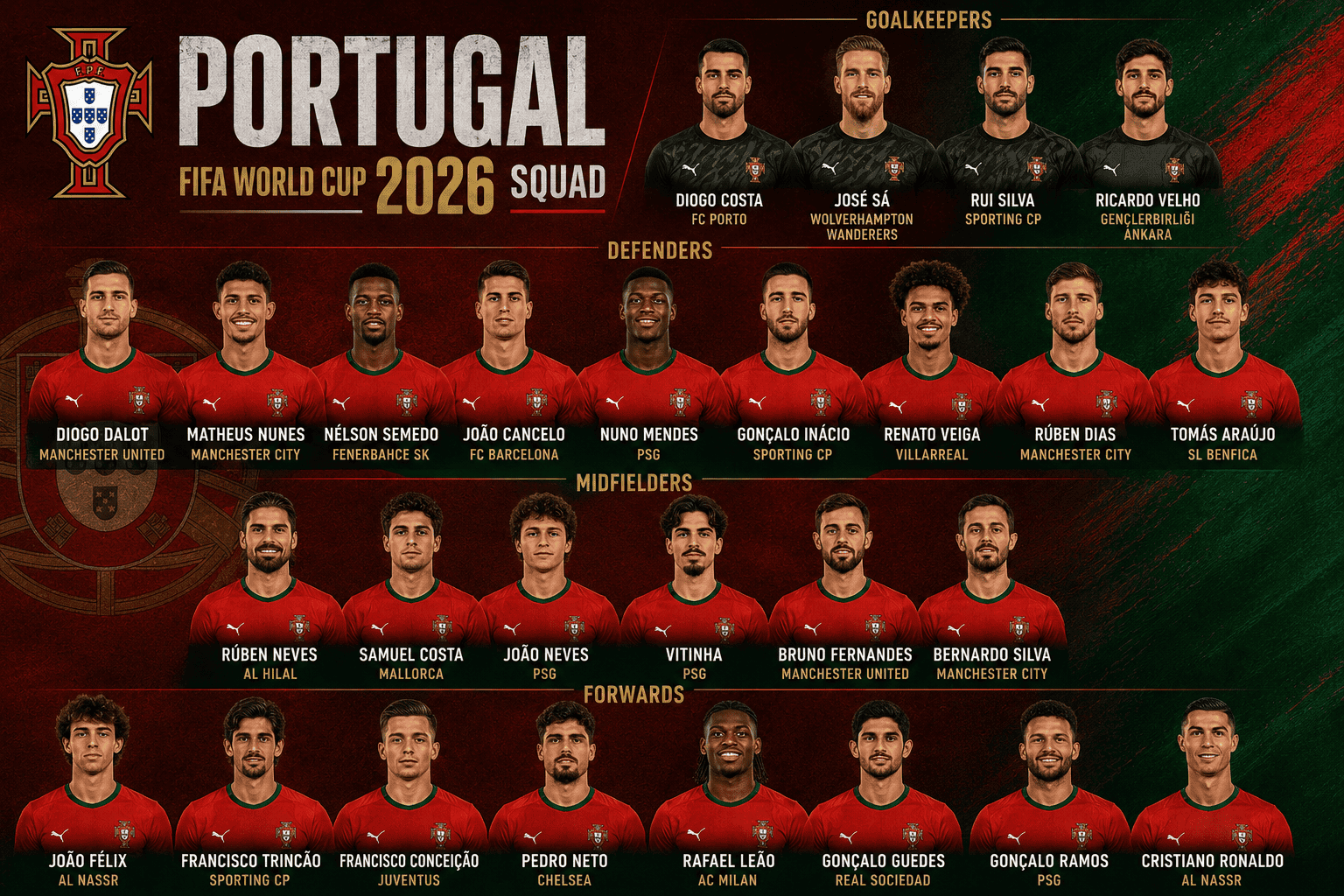
Portugal FIFA World Cup 2026 Squad – Full Player List
Goalkeepers
Goalkeepers rarely dominate headlines before tournaments.
Usually because they are noticed only when mistakes happen.
Portugal, though, possess one of the most important players in their system through Diogo Costa.
Modern football asks goalkeepers to do far more than save shots. Martínez wants Portugal building through pressure rather than avoiding it, and Costa has become central to that approach. Comfortable receiving possession and confident breaking opposition pressure, he often acts like an additional outfield player during buildup phases.
That matters because Portugal commit numbers forward.
José Sá and Rui Silva provide experienced alternatives, while Ricardo Velho completes the group. But there is little uncertainty around the hierarchy.
Costa is the starter.
And in tournament football, where penalties and narrow margins decide careers, that matters.
| Player | Club |
|---|---|
| Diogo Costa | Porto |
| Jose Sa | Wolves |
| Rui Silva | Sporting CP |
| Ricardo Velho | Gençlerbirliği S.K. |
Defenders
Portugal’s defensive structure remains one of the more interesting balancing acts in international football.
Rúben Dias continues to be the organiser. He controls positioning, protects space and often cleans situations before they become dangerous.
Because Portugal’s full-backs rarely stay conservative.
João Cancelo continues operating almost like a midfielder starting from wide areas. He drifts inside, overloads central zones and helps Portugal dominate possession.
The problem arrives during transitions.
Once Cancelo moves inside and Nuno Mendes pushes high, space opens behind them. Against teams capable of attacking quickly, Portugal can suddenly look vulnerable.
That is where Gonçalo Inácio, Renato Veiga and Tomás Araújo become important.
Youth provides recovery pace.
Dias provides control.
Different profiles. Necessary profiles.
| Player | Club |
|---|---|
| Nuno Mendes | PSG |
| Ruben Dias | Manchester City |
| Matheus Nunes | Manchester City |
| Diogo Dalot | Manchester United |
| Goncalo Inacio | Sporting CP |
| Nelson Semedo | Fenerbahce |
| Joao Cancelo | Barcelona |
| Renato Veiga | Villarreal |
| Tomas Araujo | Benfica |
Midfielders
This is where Portugal’s World Cup hopes may actually be decided.
Not through Cristiano Ronaldo.
Through midfield.
Vitinha and João Neves increasingly dictate Portugal’s rhythm. Vitinha controls tempo calmly and rarely rushes possession unnecessarily. João Neves plays differently — more aggressive, more urgent and constantly pressing.
Together, they allow Portugal to sustain attacks.
Bruno Fernandes remains the risk-taker. He attempts passes others simply do not see.
Bernardo Silva solves tactical problems in quieter ways, drifting into spaces before they appear and helping Portugal maintain structure.
Rúben Neves offers deeper control, while Samuel Costa provides defensive balance.
This area matters because Portugal’s system demands protection. Attacking full-backs and fluid forwards require midfielders willing to hold everything together.
| Player | Club |
|---|---|
| Joao Neves | PSG |
| Vitinha | PSG |
| Bernardo Silva | Manchester City |
| Bruno Fernandes | Manchester United |
| Ruben Neves | Al Hilal |
| Samuel Costa | Mallorca |
Forwards
Portugal no longer enter tournaments waiting for Cristiano Ronaldo to solve every problem himself.
That evolution was necessary.
Cristiano Ronaldo remains influential, but his role has changed. His movement is now concentrated inside the penalty area where timing and finishing still separate him from most players.
Others now carry the creative burden.
Rafael Leão stretches games instantly through pace and directness. Pedro Neto attacks space aggressively, while Francisco Conceição brings unpredictability and intensity.
Gonçalo Ramos gives Martínez another option entirely — a forward willing to press and disrupt opposition buildup.
Then there is João Félix.
He remains one of football’s most difficult players to define.
That has always been both his appeal and his frustration.
| Player | Club |
|---|---|
| Cristiano Ronaldo | Al Nassr |
| Rafael Leao | AC Milan |
| Goncalo Ramos | PSG |
| Francisco Trincao | Sporting CP |
| Joao Felix | Al Nassr |
| Goncalo Guedes | Real Sociedad |
| Pedro Neto | Chelsea |
| Francisco Conceicao | Juventus |
Key Players to Watch
Cristiano Ronaldo will naturally attract attention, but Portugal’s success could depend elsewhere.
Diogo Costa’s ability to manage pressure situations feels crucial, while Bruno Fernandes remains capable of changing matches through one pass.
Watch João Neves too.
Every World Cup creates a player who leaves with a completely different reputation.
He feels like one of the strongest candidates.
Tactical Analysis: How Portugal Could Play
Martínez has made Portugal more possession-focused and positionally fluid.
Expect Portugal to alternate between a 4-3-3 and a shape that shifts during possession phases, with Cancelo moving inside and midfielders rotating aggressively.
The system creates control.
The concern remains transition defending.
Because once knockout football becomes chaotic, tactical structure starts getting tested in uncomfortable ways.
Final Thoughts
Portugal have enough talent to beat any team left in the tournament.
That part feels obvious.
The less comfortable truth is they still carry vulnerabilities capable of punishing them against elite opponents.
Because World Cups rarely reward potential.
They expose weaknesses.

